For most of baseball history, shortstops are really good fielders who, if they can hit well, that’s a nice bonus for their team. But as the sport as a whole starts getting more flexible with positions, many primary shortstops are proving that shortstops can be not just decent or pleasantly surprising hitters but legitimate stars at the plate. Names like Carlos Correa, Francisco Lindor, Trevor Story and Xander Bogaerts come to mind. Manny Machado, as well, if whatever team he ends up with this offseason keeps using him as a shortstop. None of those players were over 25 years old this past season. In total, there were 57 players who’s primary position was listed as shortstop on baseball-reference.com, the oldest of which were 2 32-year olds in Eric Sogard and Andrew Romine, who combined for 47 starts. 31 year olds Alcides Escobar, Brandon Crawford, and Jordy Mercer were all starting shortstops this year. The youth and talent at the shortstop position is incredible right now, and these players should lead an era of success never seen before from shortstops. 30 players in 2018 were listed as a shortstop and started at least 90 games. Their average age was 26.33 years old. Ten years ago in 2008, there were 25 such players, who averaged 27.96 years old, more than a year and a half older than the average starting shortstop now, with just 3 below the age of 25 (Troy Tulowitzki, 23, Erick Aybar, 24, and Hanley Ramirez, 24). There were 9 starting shortstops under 25 this year. In 2008, those 25 shortstops had a total WAR of 64.1, an average of 2.56 per player. The 2018 group combined for 79.8 WAR, averaging 2.66. That’s a relatively small improvement, but the fact that it was 30 players instead of 25 can’t be ignored. If you assume the best players are starting, then the top 25 should average higher than the top 30 and that isn’t the case here. So shortstops have gotten younger and better over the past 10 years, and the league as a whole has gotten a little younger, but not nearly by a year and a half. These young shortstops are highlighting a movement the whole league is seeing in younger players, more power hitting, and less balls in play.
According to baseball-reference.com, shortstops hit 571 home runs in 2018, 10.2% of the leagues total of 5585 home runs. In 2008, shortstops hit just 321, just 6.6% of the 4878 hit in the MLB that year. That means that shortstops had an increase of 250 out of the league’s 707, an astounding 35.4% of the increase, and a 77.9% increase for shortstops. Two other positions saw an increase of over 100 home runs in 2018 over 2008, with second base going from 401 to 509 and DH going from 350 in ’08 to 457 this year. First base was the only position to see less home runs in 2018 than ’08, hitting 772 this year and 777 ten years ago. One year is a small sample, but as the whole league has seen a power hitting boom, with last year setting the record for most home runs league-wide and this season seeing more walk-off home runs than ever before, the shortstops of this generation are proving the position can be more than bottom-of-the-lineup slick fielding players. The Silver Slugger award winners at shortstop for the AL and NL in 2014, Alexei Ramirez and Ian Desmond, respectively, both had an OPS+ of 103, meaning they were 3% better than an average MLB hitter. In 2015: AL 107 (Xander Bogaerts), NL 113 (Brandon Crawford, also GG). 2016: AL 111 (Bogaerts), NL 134 (Corey Seager, also ROY). 2017: AL 116 (Francisco Lindor), NL 126 (Seager). 2018: AL 131 (Lindor), NL 127 (Trevor Story). The NL had back-to-back years of the shortstop SS having an OPS of above 130 when Troy Tulowitzki won it in 2010 and ’11, while the AL had two SS winners who had OPS+ marks of 99 (Ramirez, 2010, JJ Hardy, 2013) between Derek Jeter’s 132 OPS+ campaign in 2006 and Lindor’s 131 this year. The shortstop position had not been hitting the ball well for years but has been accelerating since 2015, and likely is about at its peak for now, but plenty of young stars, including Corey Seager coming back and hopefully as healthy and productive as his ’16 and ’17 years after Tommy John surgery cut his 2018 season short, should keep the shortstop position hitting well for years to come.
So who are the guys making these changes?
The best example of not only shortstops that are good hitters but a decreased emphasis on the defensive play of a shortstop is Xander Bogaerts of the Red Sox. According to baseball-reference, Bogaerts has a career defensive-WAR of -1.4, and the defensive runs saved above average stat puts him at -9 per year for his career as a shortstop and -19 this year. He has been awful for a shortstop in the field, and yet there’s little chatter of moving him because the Sox have a DH, they may not have a better option at shortstop, and his great hitting keeps him in the lineup. After winning the Silver Slugger for AL shortstops in ’15 and ’16, he had career highs in OBP, slugging, home runs, doubles, and RBI in 2018, while playing in 136 games compared to 156 and 157 in ’15 and ’16. If there were a runner up announced for Silver Slugger awards, he would have gotten it, and you could have made a good argument he deserved it over Lindor. After winning two Gold Glove awards at third base, Manny Machado looked very poor at shortstop with the Orioles but improved with the Dodgers, perhaps regaining familiarity at the position that was his primary before breaking into the major leagues, but he fit the bill of a hot-hitting, weak fielding shortstop as well overall this year. He put up a career-best 146 OPS while tying a career high with 37 home runs and totaled a personal best 107 RBI between Baltimore and LA. Some other impressive hitters who have been decent defenders, but not quite as sweet fielding as stars of the position have been associated with in the past would have been include NL Silver Slugger winner Trevor Story, Didi Gregorius, Corey Seager, and Carlos Correa. Story played great in 2016 as a rookie over 97 games, hitting 27 home runs with an OPS just over .900, finishing 4th in the NL Rookie of the Year race, went through a sophomore slump in ’17 before really breaking out this year to the tune of 37 home runs, 85 extra base hits, and 27 stolen bases to go with his 127 OPS+ mark that put him in the top 10 in NL MVP voting. Gregorius has realized the perks of hitting in Yankee Stadium, hitting at least 20 home runs the last 3 years after not hitting more than 10 before 2016. His 48 walks were not only a career high, they were more than he had in the last two years combined, totaling 44 in ’16 and ’17, allowing him to top .800 in OPS for the first time in his career, putting up a .829 mark this year. Seager played just 26 games in 2018 before getting hurt and needing Tommy John surgery, but if he’s able to come back at at least 90% of what he was in ’16 and ’17 then he’ll be a star for years to come. In 2016, he not only won Rookie of the Year but was third for MVP after hitting .308 with 71 extra base hits (26 home runs), earning a .877 OPS and a WAR of nearly 6 according to baseball-reference, which trailed just Kris Bryant, Nolan Arenado, Freddie Freeman, and Max Scherzer that year in the NL. A slight dip in his sophomore season that still earned a Silver Slugger and an injury leave some questions for his future, but those numbers speak for themselves if he’s able to return to that kind of production. Another Rookie of the Year winner, Correa won the award for the AL in 2015 despite playing just 99 games, and a 2018 setback doesn’t keep him off the list of talented young shortstops. If he would have had a larger sample size than the 109 games and 481 plate appearances he would have won the 2017 Silver Slugger for the AL shortstop position, especially considering he was on the World Series winning Astros team. He had a .315/.391/.550 slash line compared to Lindor’s .273/.337/.505 with the Indians. Hopefully Correa can stay healthy in 2019 after logging more than 110 games just once in his first 4 years in the league to be able to showcase his talents at the plate even better.
Are there still shortstops that are great fielders making an impact?
While great hitting tends to get people paid better and earn more All-Star appearances and national attention, yes, great fielding is very important, especially at premium positions like shortstop. Francisco Lindor won a Gold Glove in 2016 and has been in the top 10 in AL MVP voting each of the past three years. He pairs his great glove with an even better bat, winning the last two Silver Sluggers, getting one over Correa after finishing as the runner-up to him in 2015 AL Rookie of the Year voting, and the past two years he’s hit for an OPS of over .850 with 71 home runs and 163 extra base hits along with 40 stolen bases, and that kind of offensive production along with the sweet glove of Lindor are rarely found in one player at any position. A more traditional defensive star at shortstop is Andrelton Simmons of the Angels. The two-time reigning Gold Glove winner has 4 GG’s now in his career after going back-to-back in ’13 and ’14 when he was with the Braves. This year marked the third time he’s received MVP votes despite not yet being an All-Star in his career. His defensive WAR of 25.3 is not just the most in the majors since 2012 (his rookie year), it leads all active players and is 18th all-time. Troy Tulowitzki recently signed a minimum contract with the Yankees after not playing in 2018, while he wouldn’t be the same player he was in his prime he still had a successful season in 2016 including still playing good defense. Elvis Andrus is another very good shortstop who’s defense was maybe as valuable as his offense, and while he struggled at the plate in 2018 his defense continued to be a bright spot in a disappointing season for the Rangers. Brandon Crawford was the three-time reigning Gold Glove winner at shortstop for the NL who returned to the All-Star game this year for the second time at age 31 largely as a result of his great defense for San Francisco. Nick Ahmed took the Gold Glove from him this year, and Ahmed’s hitting has never been good, as his OPS+ of 81 this year was the best of his career, but he still put up a 3.2 WAR built on the great defense that won him the Gold Glove, showing the value that great defense at a key position still has.
As easy as it is to compare one year to one year and draw conclusions, it’s not fair to say that one year shows a trend. So I dug up the number of home runs hit at each position each year, starting in 2000, to get a better sense of how shortstops have been improving at hitting home runs compared to the rest of the league. I found that 2008, the year I used for a comparison, was a year that saw a large dip in home runs by shortstops, dropping by more than 90 from 2007, but shortstops would hit more than 350 home runs just once between 2008 and 2015, including being the only position to finish with less home runs than designated hitters from 2008-2010, when only 14 teams were using them, and then did it again in 2014 along with second base as the league saw a drop in home runs at every position except for the designated hitter, who’s home runs increased by 56 with one more team using a DH and therefore having 81 more games played with a designated hitter, as Houston’s home games went from no DH to with DH. As a whole, shortstops were outpaced in home runs by every position except for DH and of course pitcher, more than 600 behind second base while having a lead of less than 800 over DH. They’ve accounted for barely over half as many home runs as first base, which has led all positions in home runs every year from 2000-today. In breaking down the year-by-year data into 3-year chunks, I found that the league as a whole saw a steady slow decline in home runs from the 2000-’02 range through the 2012-’14 range before seeing a jump back up in 2015-’17, but when the league appeared to hit an unsustainable peak in 2017 based on this years rebound back down to a similar number to 2016, shortstops home run numbers continued increasing, while left field saw a slightly smaller increase and only designated hitters saw a bigger increase. While the league as a whole hit over 500 fewer home runs than last year, shortstops home run production went up by 37, despite some of their stars struggling (Correa had a down year and Seager was injured). First base had the biggest drop off, despite still leading the league in dingers, as aging stars have struggled and been injured, such as Joey Votto hitting just 12 home runs after 36 last year, Albert Pujols continued to decline, hitting less than 20 home runs for just the second time in his historic career, Miguel Cabrera publicly said he would no longer play hurt as he had been in recent years, and he played in just 38 games, getting the ball out of the park just 3 times. Mitch Moreland was an All-Star for the Red Sox despite hitting just 15 home runs and putting up a 0.9 WAR at first base. Other aging former-stars Adrian Gonzalez and Chris Davis struggled, as Gonzalez played just 54 games, launching 6 big fly’s, while Davis hit 16 home runs, his fewest in a season in which he played at least 60 games, as he played 128. First baseman couldn’t simply be counted on to provide good offense for the first time in recent memory (they nearly had 1000 home runs in 2017, leading positions by nearly 150 but that lead dropped to 70 this year) and star shortstops are trying to prove shortstop can be a position of offensive talent, maybe not at the level of corner outfield and first base, but they hit more home runs than second baseman, center fielders, and catchers this year after having the fewest home runs out of the 8 regular positions all but two years from 2000-2017, beating second baseman in 2000 and ’03.
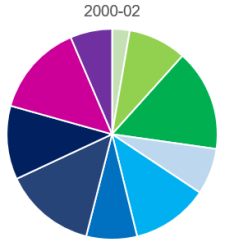
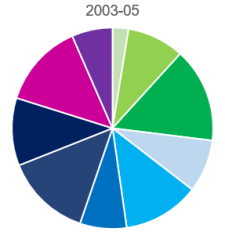
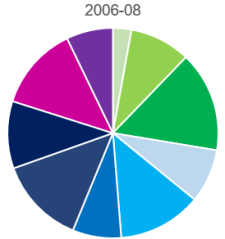
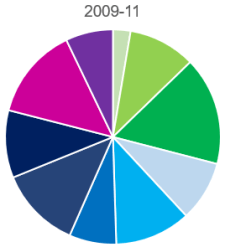
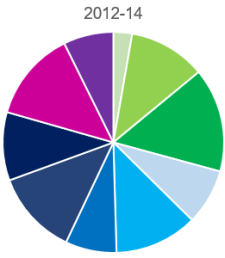
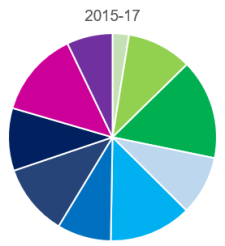


There wasn’t much change between the three year totals, and maybe 2018 will prove to be a blip and the totals will return to normal by 2020, or maybe this generation of shortstops is going to have at least their era have shortstops be as productive at the plate as they are in the field, as the spike in home runs hit by shortstops compared to the rest of the league in 2018 would suggest. If these stars at shortstop continue producing, then at least as long as they’re in their primes shortstops won’t be pushovers at the plate, as they’ve been hitting closer to average than they have in a long time, if ever.
Shortstops are coming, with plenty of young talent already in the league, as well as 5 of the top 15 prospects according to MLB Pipeline play shortstop as their primary position, including their #2 overall prospect Fernando Tatis JR, the son of a former major leaguer who projects to have good power hitting in the pros, but may be pushed to third base somewhat similar to Manny Machado or Alex Rodriguez given his size and arm strength. Regardless of how well those prospects turn out in the majors, it appears we have an exciting time of production coming from the shortstop production, and maybe even the first shortstop to win an MVP since Jimmy Rollins in 2007. As the MLB seems primed to see their popularity head back in the right direction with young stars across the league, these shortstops are helping right along with other young stars like Judge, Ohtani, Acuña, Bellinger, etc. in helping the league get the star power necessary for that potential takeoff in popularity.
Until next time,
CM
Stats and info courtesy of baseball-reference and MLB Pipeline.
 Murphy's Field
Leave a comment