As most people are aware, there are no professional sports happening in North America, or most of the world, right now due to the coronavirus. I’ve done MLB Hall of Fame ballot previews/my picks each of the last two years, and figured I could use this time to get a head start on future ballots. So, twice a week for the foreseeable future (hopefully not too long because hopefully sports will return sooner rather than later) I’ll break down one of the top candidates joining the ballot in 2021.
The 2021 class of first-balloters is a thin one, and is likely to be the first class to not have any inductees since the first-ballot class of 2012. Tim Hudson has the highest score on Bill James’ Hall of Fame Standards, Hall of Fame Monitor and the JAWS metric (all of which will be explained more later), so we’ll start with him.
Pre-MLB Career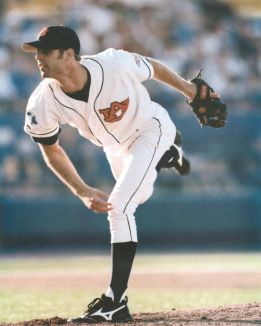
Hudson was drafted in the sixth round of the 1997 MLB draft by Oakland after his senior season at Auburn, where he had transferred to from Chattahoochee Valley Community College. At Auburn, he put together a great senior season on the mound and in the outfield, as he hit .396 with 18 home runs and 21 doubles to go along with a 15-2 record on the mound in 22 appearances (18 starts), finishing the year with a 2.97 ERA with three complete games and a shutout. He struck out 165 batters in 118 1/3 innings.
MLB Numbers and Figures
He would make his MLB debut with the A’s in 1999 after a quick rise through the minor leagues. He made 21 starts, went 11-2 with a 3.23 ERA and finished fifth in Rookie of the Year voting. He struck out 132 batters but also surrendered 62 walks in 136 1/3 innings. His walks/9 innings and strikeouts/9 innings, at 4.1 and 8,7, respectively, both ended up being career highs for him. Unfortunately, he would only beat his ERA+, a metric that takes a pitchers ERA, adjusts it for park and era factors, and sets league average to 100, of 142 twice in his career.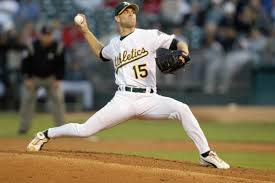
Year two, in 2000, would be the closest Hudson would come to picking up a Cy Young award, finishing as a distant second to Pedro Martinez, who won unanimously after posting a 1.74 ERA with no other qualified AL pitcher was lower than 3.70. Martinez won unanimously, but Hudson’s league-best 20 wins got him the second spot even with his 4.14 ERA, which earned just a 113 ERA+. He also made his first career All-Star appearance that year in spite of a career-worst 1.1 HR/9 innings allowed.
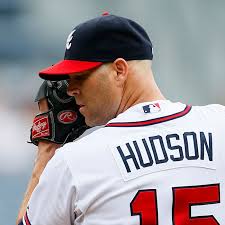 Hudson would go on to make three more All-Star squads, making the trip to the Mid-Summer Classic in 2004 with Oakland, 2010 with Atlanta, and 2014 as a Giant, when he would also pick up his lone World Series win. His best season, however, was 2003. He posted career bests in ERA, ERA+, innings pitched, WHIP and WAR. He finished fourth in Cy Young voting, with Roy Halladay winning the award, and would only finish top-five in Cy Young voting one other time in his career, in 2010, his only other season with an ERA lower than 2.90.
Hudson made 13 career postseason starts and would post a 3.69 playoff ERA in 75 2/3 innings. 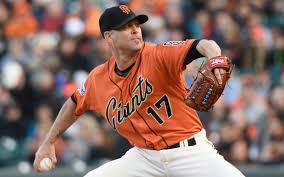 His 2014 World Series run with the Giants was the only time his team won a playoff round. His hitting potential from his college career showed later in his career when he pitched in the National League. It clearly took some time to rediscover his swing, but starting in 2007 through the end of his career, Hudson hit for a .174/.210/.233 slash line, good for a 20 OPS+, which works the same way ERA+ does in that league average is 100, higher is better and lower is worse. A 20 doesn’t sound good, and it wouldn’t be for a non-pitcher, but that ranked 25th among 159 pitchers with at least 100 plate appearances from 2007-2015 and was good for 1.8 WAR hitting.
So, is this guy a Hall of Famer or not?
Ultimately, Hudson doesn’t look like a player deserving of the Hall of Fame. Just ask this SB Nation article asking what it would take to make him a Hall of Famer that came out during Hudson’s last month in an MLB uniform. As mentioned in the intro, Hudson is tops in the incoming class in Hall of Fame Standards, Hall of Fame Monitor, and JAWS. The Standards test is the most favorable to him, so we’ll start with that.
Bill James’ Hall of Fame Standards gives Hudson a score of 42, while an average Hall of Famer would be about a 50 with the max score being 100 (though James mentions Babe Ruth scored over 100 due to the simplistic addition of his hitting and pitching numbers). That puts Hudson as the 69th-best starting pitcher by this metric, and there are 84 current Hall of Famers who were starting pitchers. His 222-133 career record helped quite a bit in boosting his score for the standards, which includes awarding points for wins, wins above .500 and record in percentages above .500.
James’ Hall of Fame Monitor is less forgiving, giving Hudson a score of 66 while 100 makes a player a likely Hall of Famer. That puts Hudson just 195th among starting pitchers, further out of the conversation for a Hall of Fame vote. His lack of Cy Young Awards and All-Star games hurt him here, as each CY is worth five points and every AS is worth three.
The JAWS system, first developed by Jay Jaffe in 2004, averages a players career WAR with their seven best seasons’ WAR (non-consecutive), to come up with a single number to compare to average Hall of Famers at their position. For starting pitchers, the average is 73.3/50.0/61.6. Hudsons WAR/7yrWAR/JAWS was 57.9/38.3/48.1, giving him the 84th-highest JAWS figure among starting pitchers all-time. That does put him ahead of Hall of Famers like Sandy Koufax and Addie Joss (who both retired at age 30), Bob Lemon (who served in WWII for three years), Whitey Ford (who won 6 World Series), and Burleigh Grimes, who’s probably one of Hudson’s best Hall of Fame comparisons to give him a shot to get in, but Grimes pitched before World War II and was inducted by Veterans Committee 30 years after he retired.
Hudson will pick up some votes, and it will be interesting to see how his vote totals compare with Andy Pettitte, as Hudson has a better ERA, ERA+, WHIP, and some other rate stats while Pettitte has more wins, strikeouts, WAR, and of course the five World Series titles.
Up next: Mark Buehrle
Stats and info courtesy of Baseball-Reference and The Baseball Cube.
 Murphy's Field
Leave a comment