With no baseball for the time being due to Covid-19, we continue our series of breaking down upcoming Hall of Fame candidates. Today, we take a look at the interesting case of Torii Hunter. To view the other articles in this series, click here.
Hunter’s case is an interesting one in large part due to another great defensive center fielder currently on the ballot: Andruw Jones. We’ll get more into comparing those two later, after we’ve broken down Hunter’s career in his own right.
Pre-MLB Career
Torii Hunter was a highly anticipated prospect after being taken in the first round (20th overall) by the Twins in the 1993 draft out of high school. He appeared at #79 on Baseball America’s pre-1997 prospect rankings but didn’t stick in the majors until 1999 as his struggles at the plate in 1997 in Double-A led the Twins to keep him in the minor leagues for most of 1998. He hit better that year, especially after a call-up to Triple-A where he hit .337 with four homers and seven doubles in 26 games. He would play 55 more games in Triple-A in 2000 when he was sent down in late May due to a slash line of .207/.243/.300 through the first 48 games of the year. He mashed at Triple-A, hitting .368 with 18 homers and 17 doubles in those 55 games and got called back up in late July. He would only return to the minors once, a three-game rehab stint in 2009, for the rest of his career.
MLB Career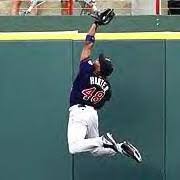
As a rookie in 1999, Hunter slashed .255/.309/.380 for a measly .689 OPS, and in the high-offense environment of ’99 that scored just a 60 in OPS+. He continued to struggle out of the gates in 2000, but after his Triple-A stint, he slashed .332/.371/.485 the rest of the year. He used that as a springboard to a 2001 season that saw him hit 27 homers, 32 doubles, win a Gold Glove, and receive two MVP votes. The Gold Glove would ultimately be the first of nine consecutive awards for Hunter among AL center fielders.
Hunter made his first All-Star game in 2002, when he hit .289 with 37 doubles (tied for a career-high), 29 home runs and stole 23 bases (also tied for a career-high). He would make four more All-Star appearances, in 2007, 2009, 2010, and 2013. His OPS+ figures in his All-Star seasons were 124, 123, 128, 126 and 115.
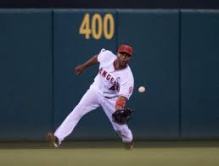 Hunter’s career-high in OPS+ came in 2012, when he hit a career-best .313 with the Angels at age 36. He added 24 doubles and 16 home runs while sharing an outfield with Mike Trout and Mark Trumbo as they both made the All-Star game over him. He added to his list of accolades by picking up Silver Slugger awards in 2009 with the Angels and 2013 with the Tigers. Hunter returned to the Twins for his final MLB season in 2015, when he managed to hit 22 home runs at age 39, a feat he hadn’t achieved since 2011.
Hunter’s career stat totals: a .277/.331/.461 slash line, 353 home runs, 498 doubles, 195 stolen bases, 2,452 hits in 2,372 games, 661 walks, 1,391 RBI and 1,296 runs. He had a 110 career OPS+ and 50.7 career WAR.
So, is this guy a Hall of Famer or not?
Originally, I thought Hunter fell a bit short of being a candidate with a good chance of getting into the Hall of Fame. Then, the comparison to Andruw Jones, who just picked up 19.4% of the vote on his third ballot in 2020, came to my mind.
Hunter: .277/.331/.461 353 HR 195 SB 1,391 RBI 1,296 R 110 OPS+ 9 Gold Gloves
Jones: .254/.337/.486 434 HR 152 SB 1,289 RBI 1,204 R 111 OPS+ 10 Gold Gloves
Those are two very similar players, though Jones only got 7.3% of the vote in his first year on the ballot, just enough to hang on. The other difference is that Jones’ growth in support has been largely driven by voters more interested in analytics in sabermetrics which would favor him over Hunter. Despite the fact that they are two of just seven outfielders all-time to have at least nine Gold Glove selections, Jones earned 202 more defensive runs saved, the key stat for defensive WAR that put his career WAR total to 62.7 compared to Hunter’s 50.7.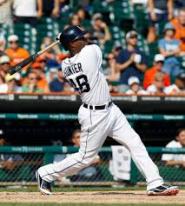
Hunter never topped 5.5 WAR in a season, and that drove down his JAWS score, where his 50.7/30.8/40.7 score is nowhere near the average Hall of Fame center fielder’s 71.3/44.7/58.0. His 40.7 places him 34th among center fielders with 19 in the Hall of Fame. Only Kirby Puckett and Larry Doby played after 1950 and are in the HOF as a center fielder with a JAWS score below 50, and they played 12 and 13 seasons, respectively, not sticking around to accrue high WAR totals.
Hall of Fame Monitor and Standards both adjust for position, so hitters end up being compared to all 162 MLB hitters currently in the Hall of Fame rather than just those at their position, and Hunter’s score of 34 in the Standards test puts him 241st, while his 58 puts him 360th in the Monitor. He was 48 hits from seeing his Monitor score go up by 11 points, as he finished just shy of the 2,500 hit plateau that’s worth 15 points compared to 4 for 2,000.
The good news for Hunter is that voters who haven’t been voting for players such as Curt Schilling, Barry Bonds, Roger Clemens, Sammy Sosa, Manny Ramirez, and Gary Sheffield aren’t likely to shift to them just because the ballot is clearing. The bad news? The average votes per ballot dropped to 6.61 in 2020 after being no lower than 7.95 from 2014-2019. Those voters might be comfortable putting fewer names on their ballot rather than someone they view as a weak candidate. Hunter will likely be a player to watch to see which side of the 5% threshold to stay on the ballot he falls on.
Up next: Dan Haren.
Stats and info courtesy of Baseball-Reference.


Leave a Reply